Future upside is more useful than past performance before investing in Mutual Funds?
Best Time to Invest in Mutual Funds is one of the most misunderstood questions in investing. Investors are often told to ignore timing completely and simply continue SIPs. But when investing lump sum money or rebalancing a large portfolio, understanding whether a mutual fund offers reasonable future return potential becomes extremely important.
If you have ever asked, “When is a good time to invest in a specific mutual fund?”, you have probably heard one of these common responses:
“Yesterday.”
Or:
“You can never time the market. Just keep doing SIPs and ignore market movements.”
While these responses sound wise, they often ignore a practical reality. Investors may have a large lump sum to deploy, a sizeable SIP corpus accumulated over years, or a need to rebalance their portfolio after market movements. In all these situations, an important question naturally arises:
Which fund should I buy — and which one should I avoid right now?
This is not about timing the market perfectly. It is about understanding whether the underlying investment process of a fund is currently positioned to deliver reasonable future returns.
Why the Best Time to Invest in Mutual Funds Matters?
This question is not about predicting market tops or bottoms. It is about evaluating a specific mutual fund and the process followed by its fund manager.
Every good fund manager follows a distinct investment philosophy. To outperform the market, the fund portfolio must differ from the market in some way — through stock selection, valuation discipline, sector allocation, or factor-based investing.
As a result, fund performance will never move exactly in line with the market. There will be phases of outperformance and phases of underperformance. No investment process works all the time.
The real question, therefore, becomes:
What is the right time to enter a particular investment process?
Equally important is understanding when not to enter one.
This may partly explain why a large number of investors exit equity mutual funds within just 24 months despite knowing that equity investing requires patience and long-term commitment.
In our view, one major reason is immediate disappointment after investing.
Across the industry, investors often select funds based on recent past performance and invest in the latest top-performing category or fund.
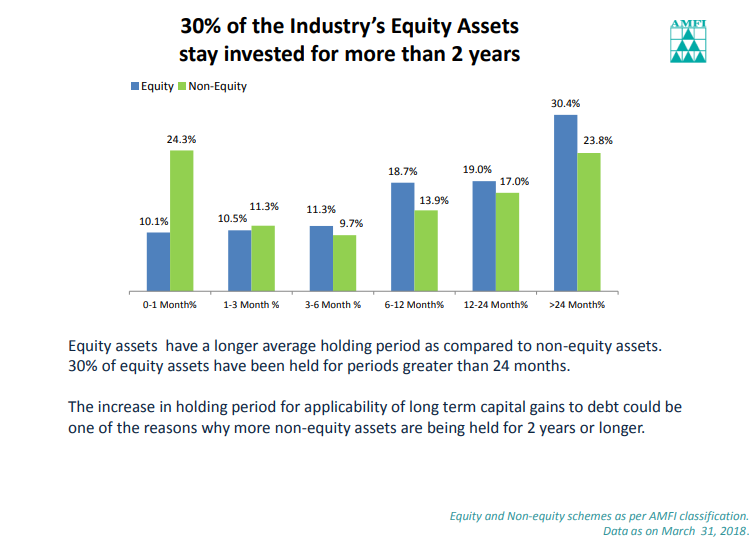
Since these funds have already delivered strong returns, the underlying stocks often become expensive. Future upside potential may reduce significantly, leading to a period of underperformance that can last for 12–24 months.
This creates frustration among investors, who often exit just before the fund’s performance cycle improves again.
Using historical observations, we identified that the latest top-performing funds usually attract the highest inflows. Naturally, this also increases the probability of large investor exits during subsequent underperformance phases.
Research Affiliates highlighted this behaviour in one of its white papers:
“Investors often choose these strategies based on recent performance… If the performance is due to the strategy becoming more and more expensive relative to the market, watch out!”
An estimate of the future upside helps stay invested and hence success
To reduce the disappointment caused by poor entry timing and improve long-term investing behaviour, we prefer recommending funds that are likely to perform reasonably well going forward rather than simply selecting recent top performers.
Forecasting exact future returns is extremely difficult. Our objective is not to precisely predict performance or identify the next best-performing fund.
Instead, the goal is simpler and more practical:
Avoid investing in funds where future return potential appears limited and where the probability of disappointment is high.
This approach encourages better investor behaviour and improves the overall mutual fund investing experience. Since we focus only on fundamentally strong (“andar-se-strong”) funds, the probability of achieving satisfactory long-term returns over a 3–5 year period improves meaningfully.
How to Identify the Best Time to Invest in Mutual Funds
We primarily focus on mutual funds that follow a relatively disciplined buy-and-hold approach. Such funds generally offer greater predictability and a higher probability of outperforming the market over long periods compared to high-turnover strategies.
Using our valuation expertise, we estimate the upside potential of individual stocks held within mutual fund portfolios. Since mutual fund holdings are disclosed every month, we can estimate the portfolio’s potential upside relative to current market prices.
This helps us evaluate the expected future return potential of different equity mutual funds from today’s valuations.
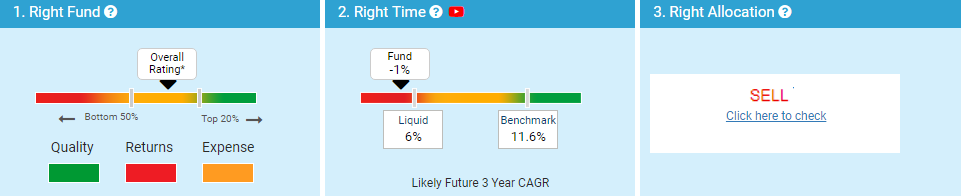
Fund A
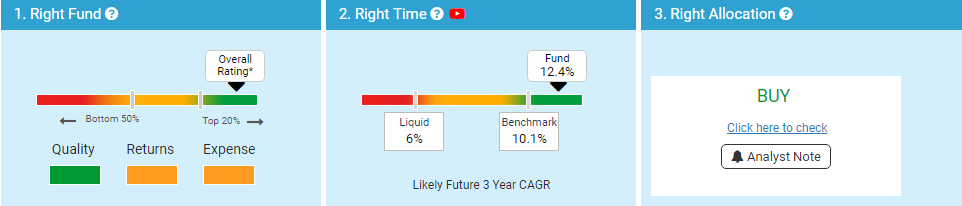
Fund B
Funds with low or limited upside potential should generally be avoided.
Does this method precisely identify the next best-performing fund? Not necessarily – and that is not the objective either.
Consistently chasing top-performing mutual funds is rarely a sustainable investment strategy. What matters more is whether a fund can help investors achieve their required long-term returns while staying aligned with their financial goals.
In the example above, Fund B may offer a better investment opportunity than Fund A, even if Fund A happens to be the recent top performer. For instance, many small-cap funds at the peak of their popularity had very low future upside potential despite exceptional past returns.
Fund B may not necessarily deliver exactly 12.4% CAGR over the next five years, but it may still generate significantly better returns than Fund A showing a future upside potential of -1%.
Similarly, investors already holding an overheated fund may benefit from gradually reducing exposure, especially when allocation sizes become disproportionately large.
First published on MoneyWorks4Me, December 2018. Reproduced here for reference; figures and any funds named reflect the original date.
Mutual fund investments are subject to market risks. Read all scheme-related documents carefully. Past performance is not indicative of future returns and the value of investments can fall as well as rise.
Third Rock Wealth, a division of MoneyWorks4Me, is a SEBI-registered Mutual Fund Distributor (AMFI Registration · ARN-361129). MoneyWorks4Me is a brand of The Alchemists Ark Private Limited. We are paid a distribution commission by the asset management company on funds you invest in through us, set per SEBI norms and disclosed in each fund’s Scheme Information Document. We do not provide investment advice within the meaning of the SEBI (Investment Advisers) Regulations, 2013. Regular Plan information only is displayed across this site.